



By Lola Magazine
The morning routine has a funny way of turning even the most organized parent into an amateur magician. One minute you’re searching for a missing shoe, the next you’re signing a permission slip with one hand while spreading peanut butter with the other. Somewhere in the middle of the chaos, lunches magically appear—or at least, that’s the goal.
The good news? Packing a nutritious lunch doesn’t have to mean gourmet bento boxes or spending Sunday meal-prepping until your refrigerator looks like a grocery store display. Whether you’re headed to the office, working from home, or cheering on the home team as a stay-at-home parent, the same simple principles can help everyone enjoy a satisfying, balanced lunch. Even better, you don’t need to make separate meals for every member of the family. With a few smart swaps and a little creativity, one lunch strategy can work for everyone at the table.
Forget “Perfect” and Aim for Balanced
Nutrition experts agree that balance matters more than perfection. Instead of focusing on strict diets or counting every macro, think of lunch as an opportunity to fuel the rest of the day.
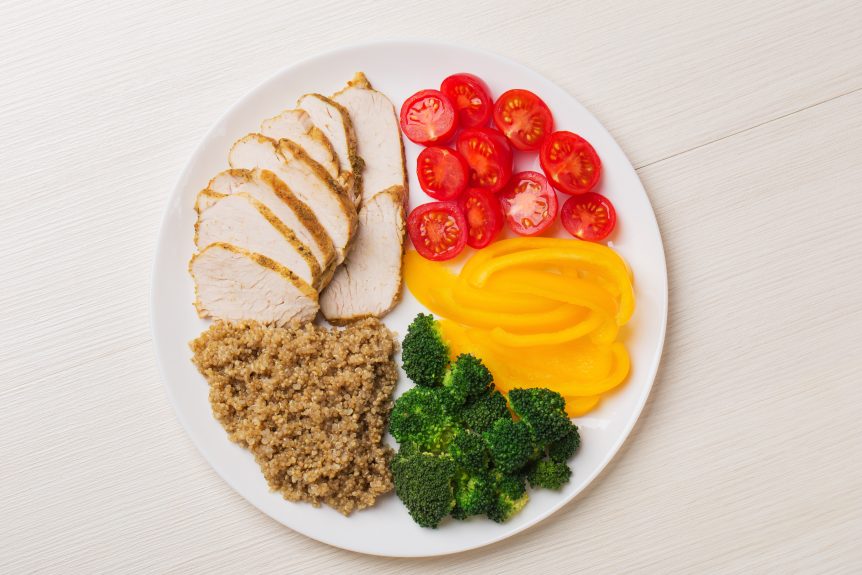
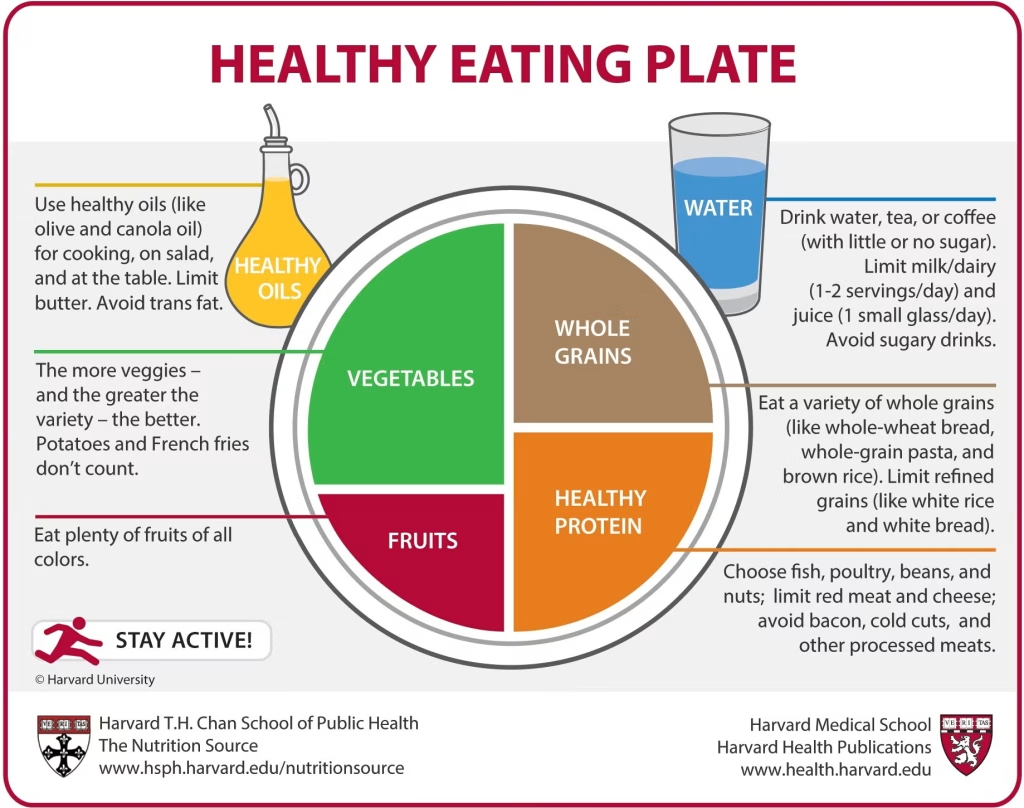 The Harvard T.H. Chan School of Public Health’s Healthy Eating Plate recommends filling about half the plate with vegetables and fruits, one-quarter with whole grains or other quality carbohydrates, and one-quarter with healthy protein. This approach naturally creates a meal that’s rich in fiber, vitamins, and staying power. Harvard researchers also emphasize that the quality of carbohydrates matters just as much, if not more, than the quantity, encouraging whole grains over refined options whenever possible.
For parents wondering about protein-to-carbohydrate ratios, there isn’t one universally recommended percentage that works for every person. Instead, registered dietitians and major nutrition organizations generally recommend pairing lean protein with fiber-rich carbohydrates at each meal. Using the quarter-plate approach means protein and complex carbs are served in roughly equal portions, creating a satisfying balance that supports steady energy throughout the afternoon.
Think of protein as the “stay-full” superstar, while healthy carbs provide the energy your brain—and your child’s growing body—needs to learn, play, and concentrate.
Flavor Makes Healthy Food More Fun
Here’s a secret every chef already knows: people don’t love food because it’s healthy. They love it because it tastes good. Adding flavor keeps lunches interesting and encourages children to try foods they might otherwise ignore. Here are some flavor profiles for inspiration:
Monday: Mediterranean
Hummus, cucumbers, tomatoes, olives, feta, and grilled chicken.
Tuesday: Tex-Mex
Black beans, corn, salsa, shredded cheese, avocado, and taco meat.
Wednesday: Asian-Inspired
Sesame noodles, edamame, carrots, cucumbers, grilled chicken, and a light soy-ginger dressing.
Thursday: Italian
Mozzarella, tomatoes, basil, turkey pepperoni, whole-grain pasta, and balsamic glaze if you’re fancy.
Friday: Build-Your-Own
DIY lunch boxes with crackers, cheese, fruit, veggies, turkey slices, nuts (if school policies allow), and yogurt dip. Rotating flavors helps prevent “lunch burnout” while exposing kids to a wider variety of foods.
Build Lunch Like a Formula
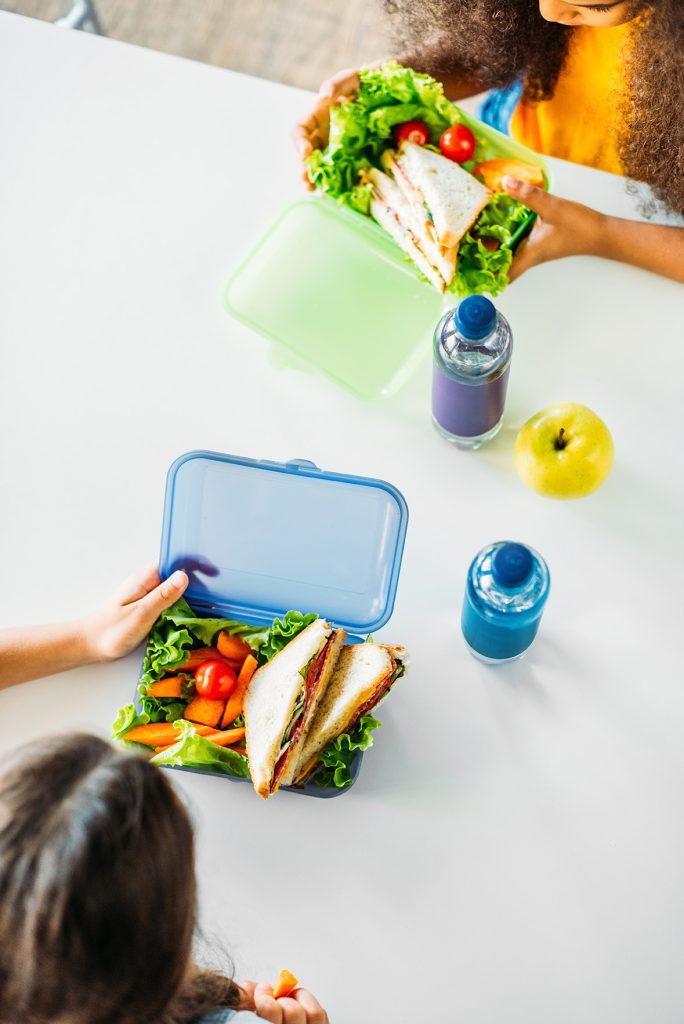
Protein + Whole Grain + Produce + Healthy Fat = Lunch Success
If decision fatigue has you staring blankly into the refrigerator every morning, remember this easy formula. Here are a few combinations the whole family can enjoy:
- Turkey and cheddar on whole-grain bread with cucumber slices, grapes, and hummus.
- Whole-wheat pasta salad with grilled chicken, cherry tomatoes, mozzarella, spinach, and olive oil vinaigrette.
- Brown rice bowl with black beans, roasted veggies, avocado, and salsa.
- Greek yogurt topped with berries, granola, walnuts, and a drizzle of honey.
- Whole-grain wrap with rotisserie chicken, spinach, shredded carrots, and ranch made with Greek yogurt.
Notice that none of these require culinary school—or waking up at 4:30 a.m.!
Winning Over the Picky Eater
Almost every parent has faced the dreaded unopened lunch box that comes home looking exactly the way it left. Picky eating is incredibly common during childhood, but forcing children to clean their plates rarely works. Instead, nutrition experts encourage repeated, pressure-free exposure to new foods.
Here are a few strategies that may help:
- Pair one new food with two familiar favorites.
- Cut vegetables into fun shapes or colorful sticks.
- Let children choose between two healthy options instead of asking open-ended questions.
- Invite kids to help pack lunches– they’re more likely to eat what they helped prepare.
- Use dips strategically. Hummus, ranch made with Greek yogurt, guacamole, or tzatziki can make vegetables much more appealing.
Remember that it can take many exposures before a child accepts a new food. Today’s “absolutely not” could become next month’s favorite snack.
Parents Deserve Better Lunches, Too
Many parents spend so much energy packing healthy lunches for their children that they forget to feed themselves. If your typical midday meal consists of leftover chicken nuggets, a handful of crackers, or finishing your toddler’s applesauce pouch, you’re certainly not alone. But let us take this opportunity to encourage you.
A lunch built around lean protein, fiber-rich carbohydrates, fruits, vegetables, and healthy fats can help reduce afternoon energy crashes while keeping hunger in check until dinner. That’s especially important for busy parents juggling work meetings, errands, school pickups, sports practices, and everything in between.
The obvious solution? Pack your own lunch at the same time you pack your child’s. Double the turkey sandwich ingredients. Make an extra wrap. Cook extra chicken at dinner specifically for tomorrow’s salad. Your future self will be grateful.
Batch Prep Without the Burnout
Meal prep doesn’t have to mean spending hours chopping vegetables into perfectly uniform cubes. A blender, food processor or other time-saving tool can become your best friend on those busy days.
Our favorite hack is using a vegetable chopper. Not only does this kitchen gadget make quick work of food prep, but it has the added benefit of helping you get out any aggression. Simply load the appropriately sized produce into the chopper and WHAM! Instant bite-sized veggies, ready to go.
Small Changes Add Up
Healthy lunches aren’t about creating picture-perfect social media moments. (Sidenote: If you actually do enjoy this kind of thing, please tag us @readlolamag. We want to see!) They’re about consistency. Maybe today you swap white bread for whole grain. Tomorrow, you add sliced peppers instead of chips. Next week your child decides carrots aren’t actually so bad after all. Those small victories add up over time.
The same goes for parents. You don’t need an elaborate meal to nourish yourself. A balanced sandwich, leftover grain bowl, or yogurt parfait can make a surprisingly big difference in your afternoon energy. At the end of the day, lunch isn’t just another task to check off the to-do list. It’s a chance to fuel learning, work, play, and family life, one bite at a time.
So, tomorrow morning, as you’re searching for that missing water bottle and wondering who borrowed the lunchbox ice pack, remember this: a well-balanced lunch doesn’t have to be perfect. It just has to be packed with a little planning, plenty of color, and enough flavor to make everyone excited to open the lid.